
Morgan County Court Records After a Jail Arrest
A Morgan County arrest may start with a warrant, a traffic stop, a local investigation, or another law-enforcement action. If the person is taken into custody, booking normally occurs at Morgan County Detention Center, the county jail operated by the Morgan County Sheriff's Office at 1380 Monticello Road in Madison. The jail record is the intake side of the event. The court record begins to take shape when a judicial officer handles first appearance or bond and when the prosecutor decides what charges to pursue.
The local court path is not the same as a jail roster. Morgan County did not have an official online public jail roster in the official sources reviewed, so current custody questions should start with jail inmate records and the jail phone at (706) 342-2164. Booking photos and photo-release limits belong with jail mugshots. Court records after the arrest focus on filed charges, case numbers, docket entries, images, dispositions, and copy requests through the Clerk of Superior and Juvenile Court or the court that has the matter.
In Morgan County, the Magistrate Court page identifies criminal jurisdiction over arrest warrants, search warrants, first appearance hearings, bond hearings, preliminary hearings, county ordinance trials, and misdemeanor trials. The District Attorney for the Ocmulgee Judicial Circuit handles felony and state criminal prosecution for Morgan County. Once a case is filed, the Clerk of Superior and Juvenile Court site provides the documented local search route for Superior and Juvenile case records.
Arrest, Booking, First Appearance, and Prosecutor Review
The sequence matters because a missing online case does not always mean no arrest occurred. A person can be arrested and booked before the clerk index has a formal case entry. A warrant arrest can also be tied to an older case, a lower-court matter, or another agency hold. Morgan County's official materials place the early criminal process in several offices rather than one database.
- Arrest or warrant: the Sheriff's Administration Division processes warrants issued by the courts, while Magistrate Court handles arrest warrants, search warrants, and pre-warrant hearings.
- Booking: intake may occur at Morgan County Detention Center, where the jail creates custody and booking records.
- First appearance and bond: Magistrate Court conducts first appearance hearings and bond hearings after arrest.
- Prosecutor review: the Ocmulgee Judicial Circuit District Attorney's Office reviews felony and state criminal matters and decides which charges to pursue.
- Court case filing: formal charges may appear in Magistrate Court, Superior Court, or another court depending on the offense and procedural posture.
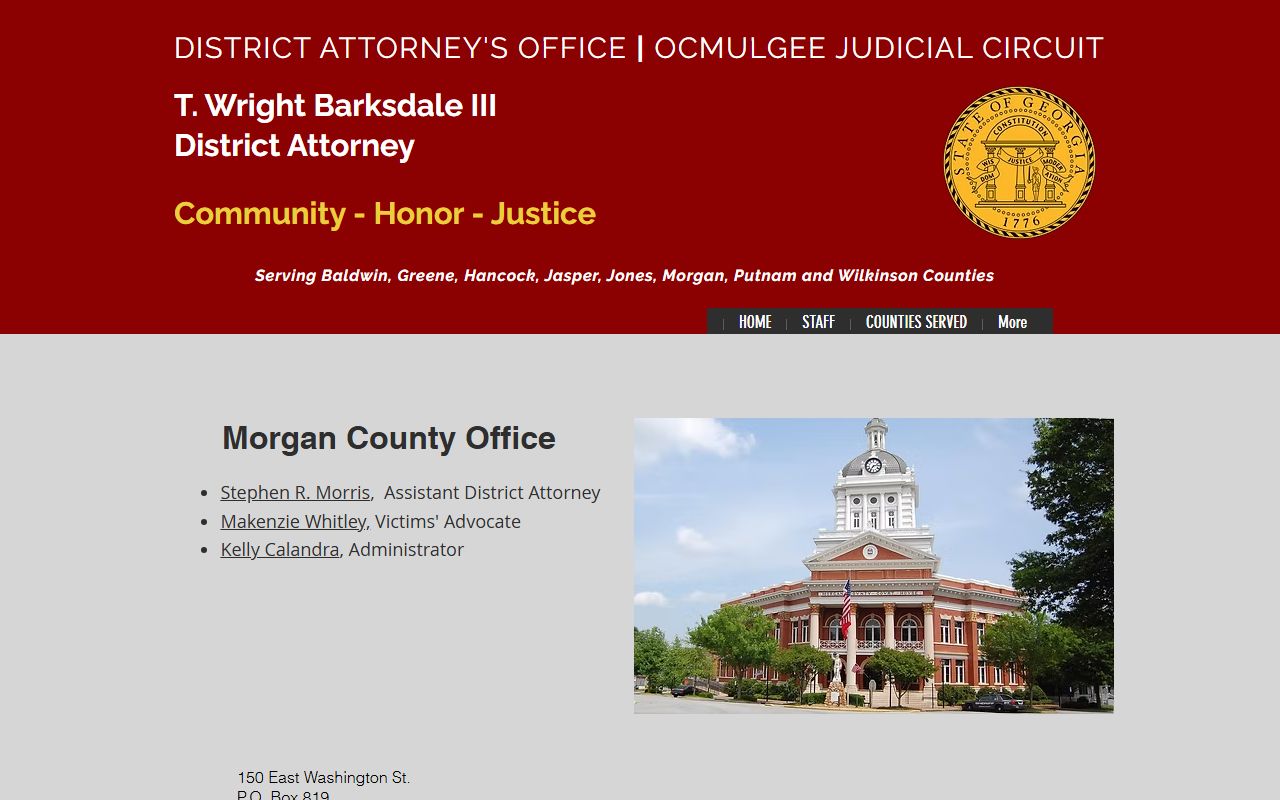
The prosecutor's role is especially important. The arrest-side charge can be a starting label, but the filed charge is the allegation that moves through court. The DA's Morgan County office is at 150 East Washington St., Madison, GA 30650, and the official office page lists District Attorney T. Wright Barksdale III, Assistant District Attorney Stephen R. Morris, Victims' Advocate Makenzie Whitley, and phone (706) 342-5071.
The Ocmulgee Judicial Circuit District Attorney Morgan County office page identifies the local prosecution office and staff.
How to Find Morgan County Court Records After an Arrest
The Morgan County Clerk of Superior and Juvenile Court website is the documented local online path for Superior and Juvenile case search. The clerk's instruction PDF says to use the Case Search tab, choose Criminal Search for an arrest-related matter, and search either by name or by case number. Do not combine both search methods in one search.
- Start with the defendant's full name, arrest date, citation, warrant paperwork, or information from a jail or open-records response.
- Open the Morgan County Clerk of Superior and Juvenile Court website and select Case Search.
- Choose Criminal Search rather than Civil Search for a criminal matter after arrest.
- Search by name using the clerk's format, such as
lastname%firstname. - If a case number is known, search by case number instead, using
year%casenumber, such as2021%001. - Open a result by clicking the green plus sign.
- If images are available, use the blue view link to see the image.
- For copies, add available documents to the cart and use the shopping cart in the top right corner to pay.
If no case appears, try less information, check spelling, wait for filing or update, contact the Clerk, or check whether the matter is still in Magistrate Court or another court. The Clerk site is not a statewide criminal-history report and should not be treated as an employment, tenant, credit, or insurance screening tool.
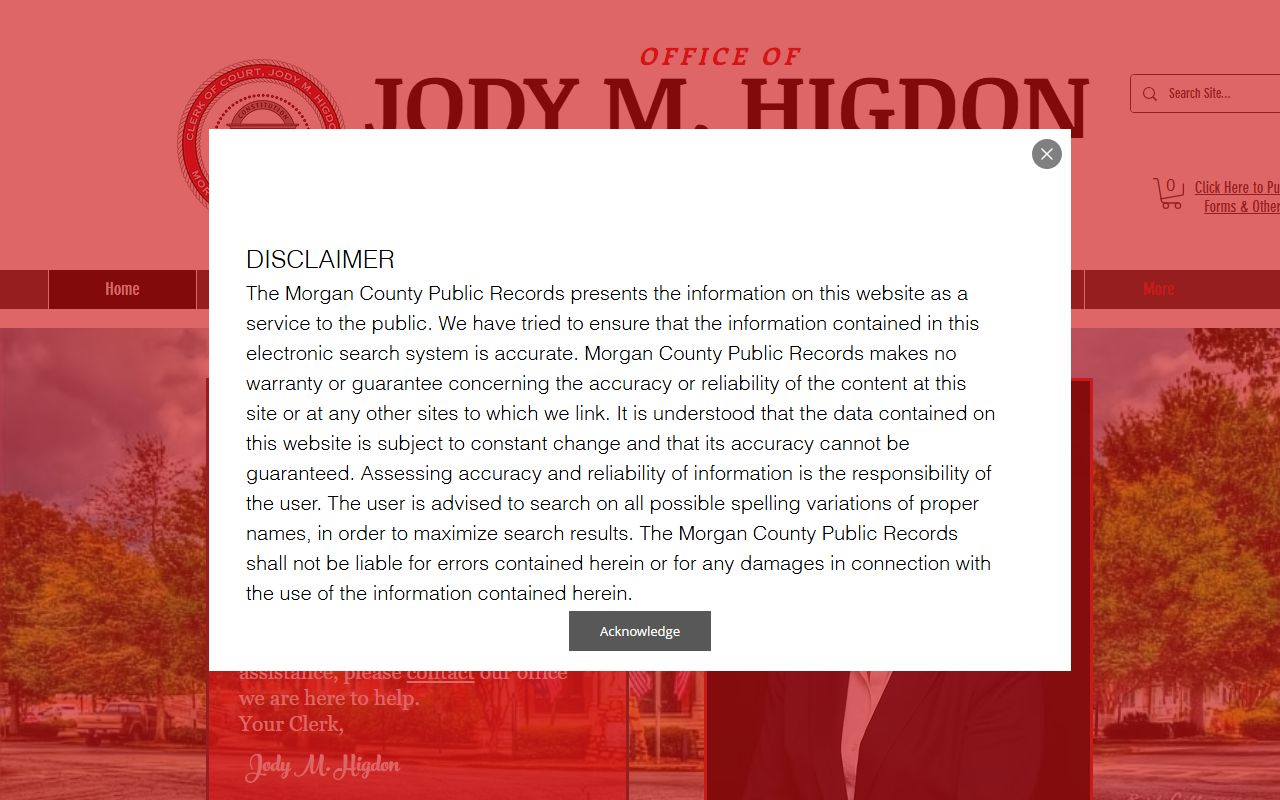
The Morgan County Clerk of Superior and Juvenile Court website provides the case-search and copy-request entry points described in the clerk instructions.
| Clerk Search Field or Action | How to Use It | Important Limit |
|---|---|---|
| Case Search tab | Use the top case-search entry point on the clerk site. | Choose the correct case type before searching. |
| Criminal Search | Use this for arrest-related criminal cases. | Civil Search is not the arrest-charge path. |
| Name search | Enter lastname%firstname, such as smith%john. | Use name or case number, not both. |
| Case number search | Enter year%casenumber, such as 2021%001. | The percent sign is part of the documented format. |
| Green plus sign | Click to open the case result. | A result may still require document images or copies for detail. |
| Blue view link | Use it when images are available. | Not every case or document image may be available online. |
| Cart for copies | Add documents and pay through the cart. | Use certified-copy channels when an official certified record is needed. |
Charging Documents After an Arrest: Complaint, Information, and Indictment
After booking, the filed court record depends on the charging route. Some matters begin with a complaint or warrant paperwork. Some non-indicted cases proceed through a prosecutor-filed information or accusation, depending on the case type and Georgia procedure. Felony cases may proceed by indictment after grand jury action. Morgan County felony and state criminal prosecution is handled through the Ocmulgee Judicial Circuit District Attorney's Office, while the Clerk is the records custodian for filed Superior and Juvenile case records.
| Complaint | Information or Accusation | Indictment | |
|---|---|---|---|
| Filed By | Law enforcement, complainant, or court process | Prosecutor | Grand jury |
| Common Use | Supports arrest, first appearance, or an early criminal proceeding. | States formal charges in a non-indicted prosecution. | Formally charges felony allegations for Superior Court prosecution. |
| Morgan County Search Note | May be handled through Magistrate Court or requested through open records if not in clerk images. | Look for the filed case and document images in the clerk system when available. | Search by defendant name or case number after filing. |
Charge Status in Morgan County Court Records After Arrest
Charges can change after an arrest. A booking description can be amended, reduced, dismissed, accused, indicted, bound over, or resolved in a way that does not match the original jail-side wording. The prosecutor, not the jail, decides what charges to pursue in court after review. A charge status should be read at the charge level, not only from the case title.
| Status | What It Means | Why It Matters |
|---|---|---|
| Pending | The charge or case is open and unresolved. | Bond, court dates, and future filings may still change. |
| Bound over | A lower-court felony or probable-cause matter moves toward Superior Court. | The early Magistrate phase may not be the final case file. |
| Accused or indicted | A prosecutor-filed accusation or grand-jury indictment has formalized charges. | The filed charge may differ from the arrest label. |
| Reduced or amended | The formal charge changed from an earlier version. | Use the latest docket and disposition, not only the booking charge. |
| Dismissed | The court charge was terminated without conviction. | Dismissal is different from record restriction. |
| Nolle prosequi | The prosecutor declines or dismisses the charge. | The charge may be ended but the record may still need restriction review. |
| Disposition | The final outcome of a charge or case. | Disposition is the key field for conviction, dismissal, plea, or other result. |
Bond and Release After an Arrest
Morgan County Magistrate Court conducts first appearance hearings and bond hearings. Early bond information may exist before a Superior Court case is easy to find in the clerk search. For same-day custody or release questions, call Morgan County Detention Center at (706) 342-2164. For court-setting questions, use the court that handled the appearance or bond hearing.
A local bond does not always end custody. A fugitive warrant, hold from another county, state-prison transfer, federal process, immigration detainer, or no-bond order can keep a person in custody even after a local charge is addressed. Morgan County's Q4 2025 jail reporting included DHS detainer activity, but that report does not mean the county operates an ICE detention facility.
| Bond or Hold Type | How It Works | Where to Confirm |
|---|---|---|
| Cash bond | Money is posted directly under the court's bond terms. | Jail and court staff can confirm accepted procedures. |
| Surety bond | A bonding company may post under court-approved terms. | Confirm local acceptance before paying anyone. |
| Own recognizance or PR release | The court releases the person on a promise to appear. | Check the court order and future court dates. |
| No-bond or agency hold | Release is blocked by the court or another agency. | Ask whether another warrant, detainer, or agency hold exists. |
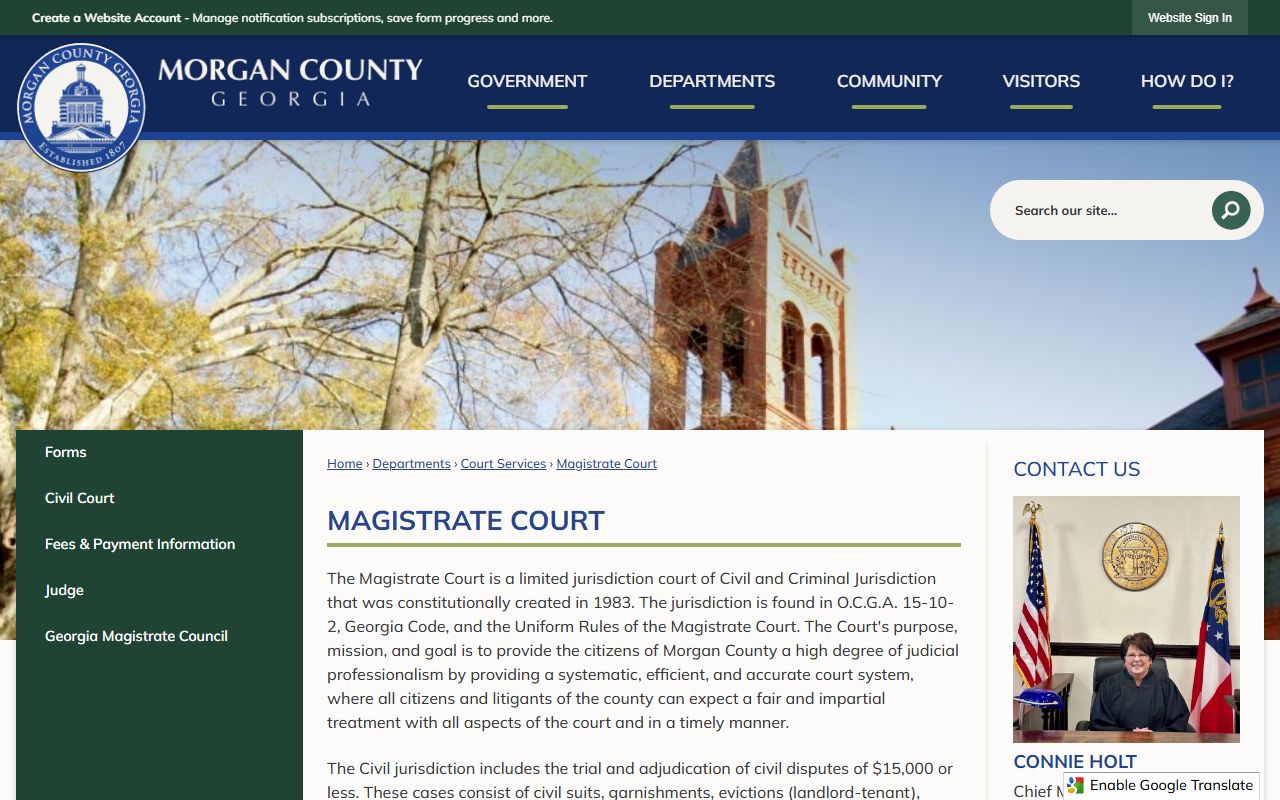
The Morgan County Magistrate Court page lists arrest warrants, search warrants, first appearance hearings, bond hearings, and preliminary hearings as part of its criminal jurisdiction.
Warrants That Lead to an Arrest
No official public Morgan County active-warrant search page was located in the research sources. Warrant information is split between the issuing court and the Sheriff's Office. The Sheriff's Divisions page says the Administration Division processes warrants issued by the three courts, and Magistrate Court handles arrest warrants, search warrants, pre-warrant hearings, first appearances, bond hearings, and preliminary hearings.
Do not treat the absence of an online warrant result as proof that no warrant exists. A bench warrant for failure to appear may show in a court file before it creates a jail record. A warrant from another county can also create a hold in Morgan County Detention Center. For warrant-processing questions, use the Sheriff's Office phone at (706) 342-1507 or the court that issued the order. A person who may have an active warrant should understand that appearing at law enforcement or court can result in arrest.
Charges vs. Convictions in Court Records After Arrest
An arrest charge is an allegation, not proof of guilt. A court charge is still an allegation until a conviction, plea, dismissal, nolle prosequi, or other disposition occurs. Morgan County court records after a jail arrest should be read with that distinction in mind, especially when a booking label remains visible in one record while the court charge changes in another.
| Charge | Conviction | |
|---|---|---|
| Stage | An accusation or formal allegation. | A result after plea, verdict, or adjudication. |
| Decision maker | Law enforcement may identify arrest-side allegations; prosecutors file court charges. | The court enters judgment after the legal process. |
| Record meaning | Shows what was alleged at a point in time. | Shows that the charge resulted in guilt or adjudicated outcome. |
| Public access | Often public unless an exemption, juvenile rule, pending-case limit, or restriction applies. | Often public unless restricted, sealed, or otherwise limited by law. |
Restricted, Sealed, and Expunged Arrest Records
Georgia commonly uses the term record restriction for limiting access to eligible criminal-history records. Research sources cite O.C.G.A. 35-3-37 and Georgia Courts or Georgia.gov record-restriction guidance. A restricted record may be limited for noncriminal justice purposes, but restriction is not the same as deleting every reference from every court, jail, prosecutor, or third-party system. Eligibility depends on the disposition and the statutory process.
| Restricted or Sealed | Expunged | |
|---|---|---|
| Basic effect | Public visibility may be limited for eligible records. | Often used casually to mean removal, but Georgia sources emphasize record restriction. |
| Georgia path | O.C.G.A. 35-3-37 may allow restriction after eligible non-conviction or other qualifying outcomes. | Use Georgia's official record-restriction process rather than assuming automatic deletion. |
| Law enforcement access | Some criminal justice access may remain. | Do not assume all government access disappears. |
| After dismissal | A dismissal may support restriction review, but it is not always self-executing. | The requester should follow Georgia Courts, Georgia.gov, GCIC, prosecutor, or court instructions. |
Background Check Considerations
The Morgan County clerk case search is a local case-access tool, not a statewide criminal-history report. State criminal-history and restriction questions should use the Georgia Bureau of Investigation and GCIC processes referenced by Georgia Courts and Georgia.gov. For custody location after sentencing, use Georgia Department of Corrections, BOP, ICE, and VINELink according to the custody type.
Important: This website is not a consumer reporting agency, and its information must not be used for FCRA-covered screening decisions.
Restricted Court Records After an Arrest in Morgan County
Georgia's Open Records Act, O.C.G.A. 50-18-70 et seq., governs public access to state and local records unless an exemption applies. O.C.G.A. 50-18-71 addresses access, copying, and allowable fees. O.C.G.A. 50-18-72(a)(4) can affect law-enforcement and prosecution records while an investigation or prosecution is pending. Juvenile records, restricted records, sealed materials, and some pending investigative material may not be available to the general public.
For jail or arrest records not available in court filings, Morgan County uses its online open-records form. The form identifies Open Record Custodian Kim Cox and the email ORR@morgancountyga.gov. For a jail-related request, answer Yes to the Sheriff's Office question and describe the needed record, such as a booking sheet, arrest report, bond record, or incident report. For filed court documents, use the Clerk's case search, copy request, or office contact instead of asking the jail to certify court filings.